We started by asking.
We asked several companies across diverse industries what works, what doesn’t, what they wish they would have known, and how we can do our part to make it easier to get started.
Your blueprint to
We set out to answer a practical question: What does it take to start, run, and scale a welding apprenticeship? So we asked the companies that are already doing it.
Their answers informed how we can help strengthen your company by strengthening your welding workforce. Below you will find what they told us, the full report, and the support we built in response.
We asked several companies across diverse industries what works, what doesn’t, what they wish they would have known, and how we can do our part to make it easier to get started.

The Foundation is presenting the Blueprint research at FABTECH in Las Vegas, October 21 to 23, alongside a panel of the employers who took part.
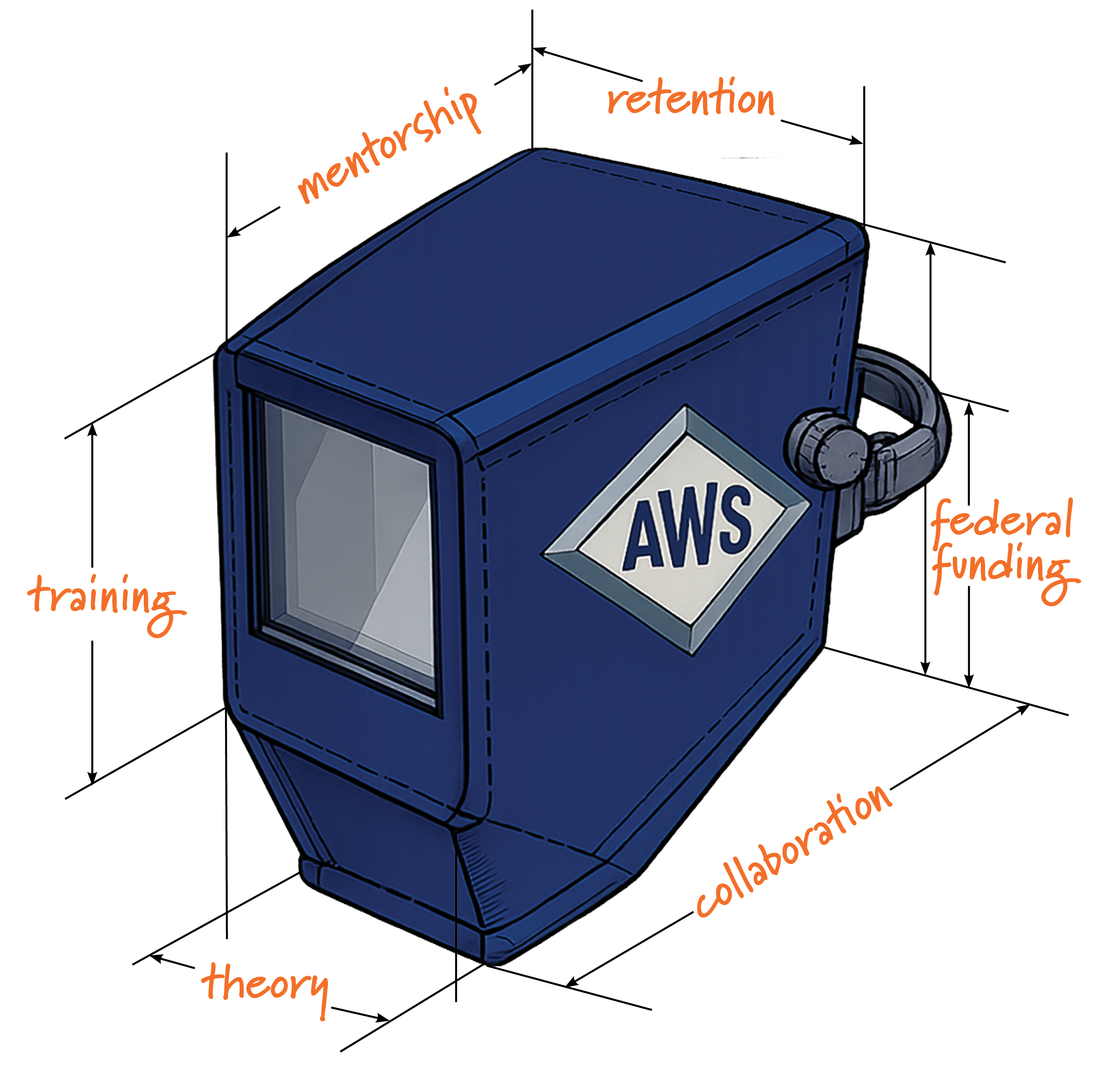
Every employer we spoke to named mentorship as the most important factor, and it goes beyond the impact of a formal mento. Trainers, supervisors, quality inspectors, and leaders can all provide important guidance to an apprentice.
Sponsors can access $3,500 in federal funding per apprentice, with state tax credits often available on top. Most employers we spoke with had no idea it existed.
Schools, workforce development boards, industry sponsors, consortiums, and staffing partners each carry part of the load, and the employers furthest along are the ones who found the right ones early.
Whether to register the program, and whether to measure progress by time or by demonstrated competency. It determines your funding, your flexibility, and how long the apprenticeship runs.
Teaching welding was the part they felt confident about. What they needed help with was support on documentation, hour tracking, competency records, and reporting.
The employers with the strongest completion rates credit their supervisors and welding mentors, with one boasting consistent completion rates between 85 and 90 percent.

AWS guidelines standardzies the competencies and coursework for apprenticeships. Three are available now—certified welder, welding inspector, and welding automation—with more sector-specific guidelines developed with industry partners on the way.

Apprenticeships pair hands-on work with related theory. Employers and educators come together to provide the best of both. Whether you’re a business or an educational institution, we can help you find the right partner and offer curriculum packages to keep things running smoothly.

Forget manual data entry in spreadsheets. ApprenticeScope automatically tracks hours, competencies, coursework, and progress in one place. Data is pre-configured to the national standard, with reporting to the Department of Labor built in. It’s free to the employers we work with.

Program leaders told us repeatedly that they wanted to know what everyone else was doing. We’re building cohorts where employers work through the same problems together. To learn more about joining a community of other employers, contact us.

Whether you’re exploring, ready to get started, or looking to take your current program to the next level, we can connect you with the resources, tools, and partners to help you get there.
©2025 American Welding Society® Foundation